HOME INDEX EXHIBITIONS EVENTS ABOUT US BLOG LINKS CONTACT US SUBSCRIBE

Iris & B. Gerald Cantor Center for Visual Arts
at Stanford University

Stanford, California

SUPPORT OUR ADVERTISERS. THEY MAKE THIS SITE POSSIBLE
Premium Ad Space
Urchin, 1955
Exhibition: Go Figure!
Richard Stankiewicz
Urchin, 1955
Steel and found metal
35 x 28-1/2 x 11-7/8 inches
By exchange with the Bowers Museum of Cultural Art, for a gift rom Jane Lathrop Stanford, Cantor Arts Center at Stanford University, 1995.77
Exhibition: William Trost Richards—True to Nature: Drawings, Watercolors, and Oil Sketches at Stanford University
William Trost Richards
Waves Crashing on Rocky Shore, 1890s
Watercolor, 4 3/4 x 9 3/4 inches
Gift of M. J. and A. E. van Löben Sels, Cantor Arts Center at Stanford University, 1992.55.138

Exhibition: Mami Wata: Arts for Water Spirits in Africa and Its Diasporas
Zoumana Sane
(dates unknown, Senegal)
Mami Wata, circa 1987
Pigment, glass
Collection of Herbert M. and Shelley Cole
Photo by Don Cole
Mami Wata, circa 1987
From the film Seeking Refuge, 2008
Exhibition: Longing for Sea Change
Yinka Shonibare MBE
Odile and Odette
video installations by contemporary artists living and working in Africa and the diasporas
Exhibition: Buildings on Paper: Architectural Drawings
France, 19th century
Design for a Store Front, c. 1800
Pen and watercolor on laid
12.56 x 17.9 inches
Robert E. and Mary B. P. Gross Fund, Cantor Arts Center at Stanford University, 1987.4
Design for a Store Front, c. 1800
Landscape with Ruins
Exhibition: Collection Highlights from Europe, Ancient Greece and Rome
Francesco Guardi (Italy, 1712–1793)
Landscape with Ruins
Oil on canvas.
67-3/8 x 72-1/2 inches
Gift of Mortimer C. Leventritt,
Cantor Arts Center at Stanford University. 1941.270
Exhibition: Rodin Sculpture Garden
Auguste Rodin
The Gates of Hell, 1880–c. 1900
Bronze, cast 1981, no. 5
639.8 x 401.3 x 84.8 inches
The Gates of Hell, 1880–c. 1900

Iris & B. Gerald Cantor Center for Visual Arts
(Cantor Arts Center at Stanford University)

328 Lomita Drive at Museum Way
Stanford, CA 94305-5060
Telephone 650-723-4177
Fax 650-725-0464

Map


http://museum.stanford.edu/index.html

Hours + Free admission
Wednesday – Sunday 11 a.m. – 5 p.m.
Thursday 11 a.m. – 8 p.m.
Including Easter and July 4
Closed Monday and Tuesday, Thanksgiving Day and December 25
FREE Admission

Directions
The Cantor Arts Center is located at the intersection of Museum Way and Lomita Drive on the Stanford campus, northwest of The Oval and the Main Quad.

  • The Rodin Sculpture Garden is located next to the Center at the corner of Lomita Drive and Roth Way.
  • The Papua New Guinea Sculpture Garden is located on Santa Teresa Street near Lomita Drive.

  • Directions from Highway 101
    Take the Embarcadero exit west and cross El Camino Real. Stay in the left lane as you cross El Camino. The street becomes Galvez Drive. Turn right on Campus Drive. Turn left on Palm Drive and continue until the next intersection, which is Museum Way. Turn right on Museum Way and you will be facing the main entrance to the Center.

  • Directions from Highway 280
    Take Alpine Road exit east. Turn right on Junipero Serra, then left on Campus Drive West. Follow Campus Drive until you reach Palm Drive. Turn right on Palm Drive, continue to Museum Way. Turn right on Museum Way and you will be facing the main entrance to the Center.

Background, History
The Cantor Arts Center boasts a proud and venerable history, as it was conceived of in tandem with the founding of Stanford University itself. The Stanford family, including Leland Jr., traveled the world collecting objects of art and cultural interest. The museum was originally created to make this collection available to students and the public. It has withstood natural disasters and periodic neglect, only to be resurrected, renewed, and expanded, with its collections stronger than ever, thanks to the passionate dedication of Stanford faculty and staff, and art lovers in the surrounding community.

Current Exhibition List

Collection Highlights from Europe 1500–1800, Ancient Greece and Rome
May 5, 2010 - continues indefinetly

Cantor Arts Center at Stanford University announces the opening on May 5, 2010 of “Collection Highlights from Europe 1500-1800, Ancient Greece and Rome,” which continues indefinitely. The museum’s second-floor gallery devoted to European art is revitalized and now includes artworks from the ancient Mediterranean, in addition to 16th- through 18th-century art from western Europe. Divided into six sections, the gallery presents highlights from the collection as well as significant loans from private collections. Admission to the museum and the exhibition is free.

Visitors can again see important works from the Center’s collection of Greek, Roman, and Cypriote artifacts, which have been off view since February 2009. This new display of ancient art offers students and the public a wide variety of objects to study and enjoy, including portrait reliefs from Palmyra, clusters of red- and black-figure Grecian vases, marble torsos from Rome, as well as diverse Cypriote vessels.

The other five sections in the gallery are devoted to European paintings, sculpture, and works on paper dating from about 1500 to 1800. Portraits by Joseph Wright of Derby and Thomas Gainsborough and Gavin Hamilton’s neoclassical “Hebe” are featured with other paintings from Great Britain. Abraham van Beyeren’s “Still Life with Crab” and “The Sacrifice of Jeroboam” by the pre-Rembrandt master Claes Moeyaert are among the paintings included in the area devoted to the Lowlands. The Italian paintings include “Virgin and Child with St. John” by Jacopo Sellaio, Francesco Trevesani’s poignant “Dead Christ,” and the mysterious “Sorceress” by Bartolomeo Guidobono. In addition four eccentric, allegorical portraits from the circle of the Milanese artist Giuseppe Arcimboldo are on loan from the collection of Kirk Edward Long. The French section features Jean Vignon’s portrayal of the “Lament of St. Peter” and a recent acquisition, François-André Vincent’s depiction of “Zeuxis Choosing His Models.” In addition, the Thoma family is lending three more paintings from colonial South America to join the Cuzco school “Last Judgment” already on loan to the museum.

The final section of the gallery is devoted to the Center’s important collection of works on paper. “Because of their sensitivity to light, these works cannot remain on view for very long,” explained Bernard Barryte, the Center’s curator of European art, “so this space will enable the staff to organize small, focused displays that will change twice a year." Celebrating the new installation of classical antiquities, the first rotation of works on paper examines the European fascination with ruins.

The gallery's installation is supported by Cantor Arts Center Members.


October 7, 2009 – June 26, 2011
Longing for Sea Change

  • Odile and Odette
    June 16 – January 9, 2011

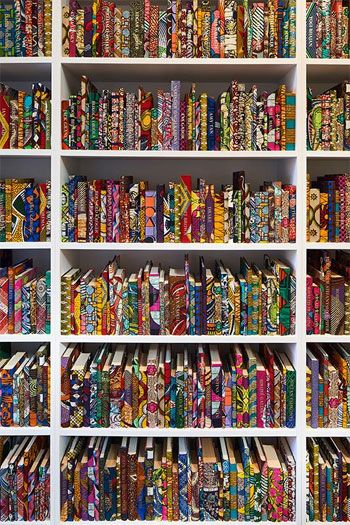
Two ballerinas, identically dressed in colorful batik-printed tutus, face each other, and their synchronized movements within a gilded frame create the illusion of a mirrored figure. In this clever twist on Tchaikovsky’s ballet Swan Lake, British-born Nigerian artist Yinka Shonibare MBE questions stereotypical “African” and “Western” identities in today’s transnational world.

This series presents video installations by contemporary artists living and working in Africa and the diasporas. Emotionally stirring and symbolic, the visual narratives address broad issues of humanity in moments of upheaval, fragmentation and transition. The works are also deeply personal, with a longing for transformation and the desire to belong. The series began with “Spirit of ‘76” (6 minutes, 24 seconds), made by South African artist Berni Searle in 2007, followed by Searle’s “Seeking Refuge” made in 2008, (5 minutes, 56 seconds), from January 13 to June 6, 2010. Other video installations continue through June 26, 2011.


June 23 – September 26, 2010
William Trost Richards – True to Nature: Drawings, Watercolors and Oil Sketches at Stanford University

In 1992, M.J. and A.E. van Loben Sels gave the museum more than 230 works by William Trost Richards (1833-1905), an accomplished landscape and marine painter. This exhibition of approximately 75 works includes pen and pencil drawings, watercolors, small oil studies and a sketchbook, that reveal the artist’s precise technique and his devotion to nature. Richards began to draw in his childhood. Although he lived on the East Coast most of his life, he traveled to Europe more than 15 times, producing numerous studies in fair and foul weather. Seascapes were his favorite subject, and his watercolors and oils contain views of both smooth and turbulent waters and the luminous sky.

June 30 – October 17, 2010
The Art of Architecture: Drawings by Victor Postolle and Frank Lloyd Wright (working title)

Vitruvius, the earliest known architectural writer, identified three qualities that are essential to design: utilitas, firmitas, venustas – utility, firmness, beauty. Like the structures that they define, architectural drawings can be both practical and aesthetic. The quality of plans and elevations can promote an architect’s project or inspire other designers. These articulate drawings by Victor Postolle, a 19th-century French architect; Frank Lloyd Wright, the best-known 20th-century American architect; and others reveal the evolution of architectural style: two-dimensional elevations and plans were common until the late 19th century when perspectives and landscape imagery integrated the design to its site.

August 4, 2010 – January 2, 2011
Mami Wata: Arts for Water Spirits in Africa and Its Diasporas

This is the first major American exhibition to present a comprehensive examination of the dynamic visual arts associated with water spirits. Over 200 works present a compelling range of art forms that portray the water deity widely known as Mami Wata (pidgin English for “Mother Water” or “Water Mistress”). The exhibition highlights both traditional and contemporary images of Mami Wata and her consorts from across the African continent as well as from the Caribbean, Brazil and the United States. It offers a rich variety of media including magnificent masks, kinetic sculptures, vibrant paintings and inspired shrine recreations.


Go Figure!
September 1 - August 5, 2012

The Cantor Arts Center at Stanford University announces new displays of contemporary art. When the art museum at Stanford reopened in 1999 as the Cantor Arts Center, the top floor of its new wing was devoted to art of the past four decades. Since then, more than 750 works of European and American art in diverse media have been added to the modern and contemporary collection, expanding it to 2700 objects and extending it into the 21st century. Selections from this enhanced collection open in four galleries.

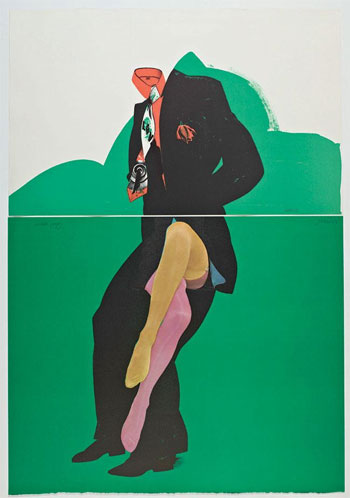
“Go Figure!” begins September 1, 2010. Although recent art is often equated with abstraction, many important artists of the last 50 years have explored the human figure in their paintings and three-dimensional work. “Go Figure” includes 25 figurative paintings and sculpture, including witty examples by Karel Appel, Richard Shaw, Richard Stankiewicz, Viola Frey, and Roger Brown; politically charged works by Robert Arneson and Terry Allen; and traditional approaches to the human form by Robert Graham and Martin Blank. This overview includes works from each decade since the 1950s, presented in three adjacent spaces: the Oshman Family Rotunda, the H. L. Kwee Galleria, and the McMurtry Family Terrace.


Collections

  • Europe & America
  • Modern & Contemporary
  • Works on Paper: Prints, Drawings, and Photographs
  • Asia
  • Africa
  • Oceania
  • Native Americas
  • Stanford Family Collection


Event Calendar
Online event calendar: http://events.stanford.edu/byOrganization/18/

Support Your Local Galleries and Museums! They Are Economic Engines for Your Community.

Subscribe to Our Free Weekly Email Newsletter!

Advertise with this banner
BACK NEXT
Copyright 2010 Art Museum Touring.com