
| HOME | INDEX | EXHIBITIONS | ABOUT US | LINKS | CONTACT US | SUBSCRIBE |
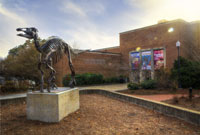 |
McClung Museum of Natural History and Culture Knoxville, TN |
| SUPPORT OUR ADVERTISERS. THEY MAKE THIS SITE POSSIBLE |
| Premium Ad Space |
|
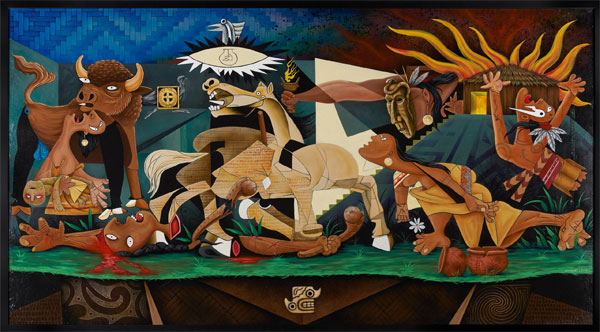
Exhibition: Homelands: Connecting to Mounds through Native Art
Through 12/15/2027 (more information) |
| John Henry Gloyne (Eastern Band Cherokee/Osage/Pawnee, 1983–) |
| Birthright: A vision into the plight of Southeastern indigenous culture through the eyes of Guernica, 2024 |
| Acrylic on panel, 4’ x 7½’ |
| Museum Purchase, 2024.12 |
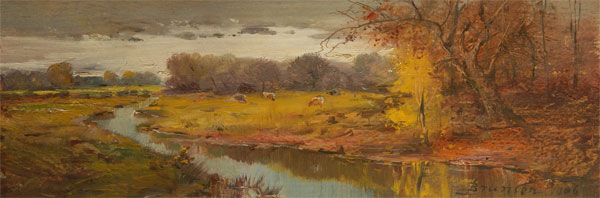
| Lloyd Branson |
| Landscape with Stream, 1906 |
| Oil on panel. 1962.20.1 |
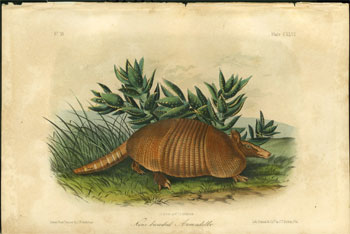
| Nine Banded Armadillo |
| stone lithograph |
| John James Audubon’s folio Viviparous Quadrupeds of North America. |
McClung Museum of Natural History and Culture
The University of Tennessee
1327 Circle Park Drive
Knoxville, TN 37996-3200
TELEPHONE: (865) 974-2144
FAX: (865) 974-3827
Map
E-MAIL: museum@utk.edu
mcclungmuseum.utk.edu
ADMISSION:
Admission to the McClung Museum is always FREE.
MUSEUM HOURS
We are now open on a limited basis. Advanced registration is required.
The Museum is OPEN:
-
* Monday through Saturday: 9:00 am to 5:00 pm
* Sunday: 1:00 to 5:00 pm
The Museum is CLOSED:
* New Year's Day
* Easter Sunday
* Memorial Day
* Fourth of July
* Labor Day
* Thanksgiving Day
* Christmas Eve and Christmas Day
The McClung Museum is a general museum with collections in anthropology, archaeology, decorative arts, local history, and natural history. The exhibits document ways of life, cultural trends, and technologies from prehistoric times to the present day, and showcase much of Tennessee's past -- its geology, history, art, and culture. The McClung Museum is a special place -- a place of discovery, a place to learn about the world around us.
As a part of the University of Tennessee, the Museum supports and participates in the University's mission to serve the state, region, and nation through scholarship, teaching, artistic creation, professional practice, and public service.
The professionalism and high caliber of the Museum are reflected in its accreditation by the American Association of Museums. In fact, the McClung Museum is one of only 12 museums in Tennessee to be so recognized.
I invite you to visit the Museum and to enjoy the many experiences we offer. As Lewis, a 4th grader, wrote to us: "It is the best museum in the world."
Exhibition
Homelands: Connecting to Mounds through Native Art
Through December 2027
(more information)
Coming into View
January 12- December 8, 2024.
(more information)
Masterful Mammals
Through 06/2026
(more information)
|
|
||
Subscribe to Our Free Weekly Email Newsletter!