Adults $15, Seniors $13, Students $11
Youth (16 and under) and Salem, MA residents admitted free
Yin Yu Tang tour is an additional $5
(For more information on Yin Yu Tang please visit our website)
PEM is open Tuesday – Sunday and holiday Mondays from 10 am – 5 pm
Closed Thanksgiving, Christmas and News Year’s Day
Mission & Vision Statement
The mission of the Peabody Essex Museum is to celebrate outstanding artistic and cultural creativity by collecting, stewarding and interpreting objects of art and culture in ways that increase knowledge, enrich the spirit, engage the mind and stimulate the senses. Through its exhibitions, programs, publications, media and related activities, PEM strives to create experiences that transform people's lives by broadening their perspectives, attitudes, and knowledge of themselves and the wider world.
Collections
As the nation's oldest continuously operating museum, PEM was among the first museums in America to collect works of art and culture from around the world. Its collections of contemporary and historic American, Asian, Maritime, Oceanic, Native American, and African art and culture, as well as its archival library and historic American and Chinese houses, are among the finest of their kind. PEM is committed to meeting the highest professional standards in the development, management, care, and preservation of its collections.
Daily Tours
Times and dates may vary
We offer daily gallery and house tours for every age and audience. Choose from a brief, focused discussion about a single work of art, tours designed just for families and a unique look at spectacular homes built worlds apart. Tours are included with museum admission. Tickets are available at the admissions desk. Please note that space is limited and tours are subject to availability.
Family Gallery Exploration
These short, 30-minute gallery adventures are designed just for families. Each weekend’s theme includes plenty of hands-on activities. Recommended for families with children ages 5 and up. June-September: Tuesdays and Thursdays at 11 am and Saturdays and Sundays at 1 pm
September-June: Saturdays and Sundays at 1 pm
Art in Focus
Learn how to look closely at a single work of art. Docents explain how to approach artwork, absorb the overall impact and narrow your investigation to the details. These 15-minute guided discussions feature something new each month. Check the Calendar for information. Sundays at 2:30 pm
Special Exhibitions
Explore a current special exhibition or one aspect of the PEM collection. Ask at the information desk for the tour of the day. Daily at 1 pm
Collection Highlights
Enjoy lively discussions about distinctive objects in the PEM collection, from Cleopatra’s Barge to N.C. Wyeth’s painting of family life aboard ship or the delightful Chinese moon bed. You’ll never see art in quite the same way again. Daily at 11:30 am
Salem Historic Houses
- Explore American architecture and decorative arts in the John Ward (ca. 1684) and the Gardner-Pingree (1804) historic houses. The John Ward House is one of the area’s finest surviving 17th-century buildings. With its steeply pitched gables and diamond-paned leaded windows, it is an outstanding example of First Period architecture. The Gardner-Pingree House, an elegantly proportioned Federal-style structure, is one of Salem architect Samuel McIntire’s finest and best-preserved designs. Daily at 12:30 and 2:00 pm
- Two Merchant’s Homes: Yin Yu Tang and Gardner - Pingree
The Chinese house at PEM and the Gardner-Pingree House were both built by wealthy merchants around the same time but about 8,000 miles apart. See how the architecture and art in each of these early 19th-century houses reflect the personal wealth, taste and cultural values of their owners. Consider how their similar attitudes toward family life relate to the way we live today. Tuesday, Wednesday, Thursday, Friday at 2:45 pm.
Current Exhibitions:
IMPRINTS: PHOTOGRAPHS BY MARK RUWEDEL
JUNE 12, 2010 – JANUARY 1, 2011
This summer the Peabody Essex Museum (PEM) presents Imprints: Photographs by Mark Ruwedel –– 41 spectacular black-and-white and color images of dinosaur tracks and ancient human footpaths. The subject of a major book published by Yale University Press and showing now at the Tate Modern in London, Ruwedel’s work is as visually striking as it is conceptually rich, building on concerns raised by “New Topographics” photographers such as Robert Adams, and resonating strongly with Land School artists such as Richard Long and Hamish Fulton.
“For anyone who loves photography, Ruwedel’s photographs are not to be missed. He is the sort of photographer other photographers watch,” said Phillip Prodger, PEM Curator of Photography. “The richness and beauty of his prints commands attention from the start but their jewel-like detail invites repeated viewing. They get better every time you see them.”
In these works, footprints appear and disappear, inexplicably descending into gorges, crossing rivers and circling mountains — improbably preserved evidence of peoples and animals long since gone from the earth. The passage of millennia is written on the land, and few can read a landscape as well as Ruwedel, one of the country’s preeminent landscape photographers and an unparalleled craftsman with an eye for geologic time.
OUT IN THE FIELD AND BACK IN THE DARKROOM
Working in the rugged tradition of Timothy O’Sullivan and William Henry Jackson, Ruwedel captures locations so remote as to be uncharted. Carrying a large-format camera across deserts and high plains, Ruwedel has explored perilous spots beyond maps and cell-phone signals. Rarely, as depicted in one stunning image, the ideal scene is not farther than the edge of a parking lot where dinosaur tracks wait just outside the perimeter of human activity, visible only to those who know how to look.
Back in the darkroom, Ruwedel develops his 8x10-inch negatives, revealing astonishingly subtle details from the foreground to the distant horizon. Among the finest printers working today, Ruwedel pushes the limits of darkroom technique and the physical capacity of the human eye and roving spirit to process all there is to see.
Despite their evident grandeur, Ruwedel’s vistas of the American West transcend documentation of craggy rock formations, wide-open skies and dramatic sweeps of uninhabited land. Far beyond traditional landscapes, the images raise questions about nature, permanence and the meaning of photographic representation.
Faces of Devotion, Indian Sculpture from the Figiel Collection
On view April 10, 2010 to January 16, 2012
Traditional Indian Art Gallery
The Peabody Essex Museum recently acquired the Dr. Leo Figiel Collection of Indian sculpture––widely regarded as the finest collection of its kind. This exhibition presents a dramatic selection of ritual bronzes spanning the last millennium featuring depictions of deified heroes, pastoral gods and goddesses, and totemic animal spirits. These bronzes were principally made for Hindu ritual practice in the west and southwest regions of India and are the best examples of local and vernacular artistry. A complement to neighboring galleries of traditional and contemporary Indian art, this exhibition offers an opportunity to explore the connections between India’s artistic past and present.
Of Gods and Mortals, Traditional Art from India
On view through March 1, 2012
Traditional Indian Art Gallery
In India, art is an integral part of daily life. The importance of paintings, sculpture, textiles and other art forms comprises two basic categories, one related to religious practices and the other to the expression of prestige and social position. This new installation of works from the Peabody Essex Museum’s collection of Indian art will feature approximately 28 pieces, principally representing the 1800’s to the present.
Fish, Silk, Tea, Bamboo: Cultivating an Image of China
Through December 31, 2010
Through delicate works on paper and other select objects, explore four essential motifs Westerners often associate with China -- fish, silk, tea, bamboo. Each was cultivated for artistic expression as well as profit. All helped shape the emerging concept of the Middle Kingdom in 18th-century Europe.
- “Patience is power. With time and patience the mulberry leaf becomes a silk gown.”
Silk production is a precise, time-consuming and complex process. Explore its many steps through the paintings in three albums on view nearby. Together, these beautiful images — of cultivating silkworms and transforming thread from their cocoons into cloth — show the important role silk has played in Chinese culture for more than 5,000 years
Upcoming Exhibitions:
EYE SPY, PLAYING WITH PERCEPTION
JUNE 19, 2010 – JUNE 1, 2011
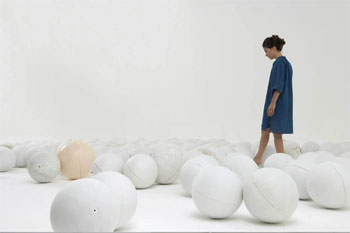
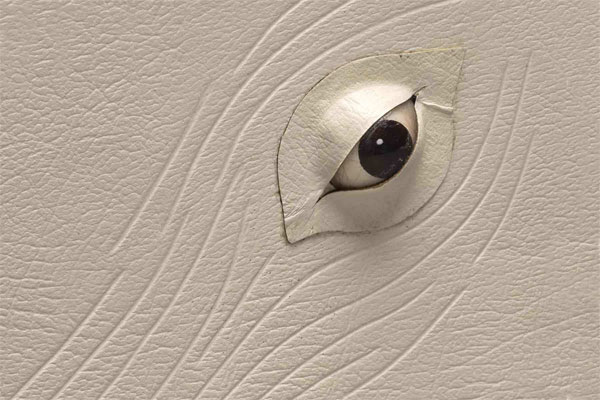
This summer, the Peabody Essex Museum (PEM) unveils a captivating exhibition exploring what we see and how we see it. Eye Spy, Playing with Perception, on view in PEM’s interactive Art & Nature Center from June 19, 2010 to June 1, 2011, presents work by 11 contemporary artists challenging visual expectations and revealing an array of illusionary surprises. From shadow sculptures and 3D images, to holograms and distortion, Eye Spy invites careful examination into what we think we see versus what we actually physically perceive.
“By manipulating the most basic components of perception –– light, shadow, line, color, shape, motion and depth –– the artworks in Eye Spy trick our eyes and fool our brains,” said Jane Winchell, the Sarah Fraser Robbins Director of PEM’s Art & Nature Center. “Visitors to the exhibition will delight in the beauty of these mind-stretching objects.”
The artists in Eye Spy utilize a broad spectrum of materials and methods to achieve unexpected optical effects. One inventive approach comes from New York-based artist, Devorah Sperber, who renders well-known masterpieces of Western art (such as Renoir’s A Girl with a Watering Can (1876), seen left) by refracting the images into thousands of colorful spools of thread. Without the aid of a viewing lens, Sperber’s creations appear as an abstract grid that the viewer’s eye cannot decipher. With the acrylic lens mounted just so, the image coalesces, inverts, and becomes instantly recognizable.
While some artists in Eye Spy manipulate reality with optical tricks, others like Robert Lazzarini prefer to physically alter spacial reality. Lazzarini, an artist working in Brooklyn, NY, combines computer manipulation with traditional sculpting methods to faithfully recreate everyday objects like phones, teacups and furniture (chair, 2000, seen right) at extreme perspectives, apparently to the point of distortion. The resulting artworks seem to vacillate between two and three-dimensions and give the impression that they are going to collapse into themselves, or as the artist states, “slip toward their own demise.”
Interactive computer stations, video interviews and hands-on activities appear throughout the exhibition to engagingly demonstrate the relationship between the art on view and the science of perception. After leaving PEM, the Eye Spy fun continues on eye-spy-pem.tumblr.com with an opportunity to determine how perception and illusion influence the way we interpret the world around us.
EXHIBITION EVENTS
Saturday, June 19th | 10 am - 4 pm
- Opening Day| All activities FREE with museum admission
- Enjoy a fun-filled day of magic, illusion and art in celebration of the opening of Eye Spy, Playing with Perception in PEM’s interactive Art & Nature Center. Participate in a magic show, investigate optical illusions, meet featured artists and create your own illusion-inspired art.
EXHIBITION CREDITS
- Support provided by the East India Marine Associates (EIMA) of the Peabody Essex Museum.
- Media Sponsor –– Mix 104-1
Hidden Treasures from the Forbidden City, The Emperor’s Private Paradise
Opening September 14, 2010
Never before seen by the public, the contents of an Emperor’s private retreat deep within the Forbidden City will be revealed for the first time at the Peabody Essex Museum.
An 18th-century compound in a hidden quadrant of the immense imperial complex, the Qianlong Garden (also known as the Tranquility and Longevity Palace Garden), is part of a decade-long, multimillion-dollar conservation initiative undertaken by the World Monuments Fund in partnership with the Palace Museum, Beijing.
Ninety objects of ceremony and leisure — murals, paintings, wall coverings, furniture, architectural elements, jades and cloisonné — unveil the private realm of the Qianlong Emperor (r.1736-1796), one of history’s most influential figures. In his time, he was among the richest, most powerful men the world. A connoisseur, scholar and devout Buddhist, he created a luxurious garden compound to serve throughout his retirement as a secluded place of contemplation, repose and entertainment.
Hidden Treasures from the Forbidden City, The Emperor's Private Paradise is organized by the Peabody Essex Museum in cooperation with the World Monuments Fund
|